
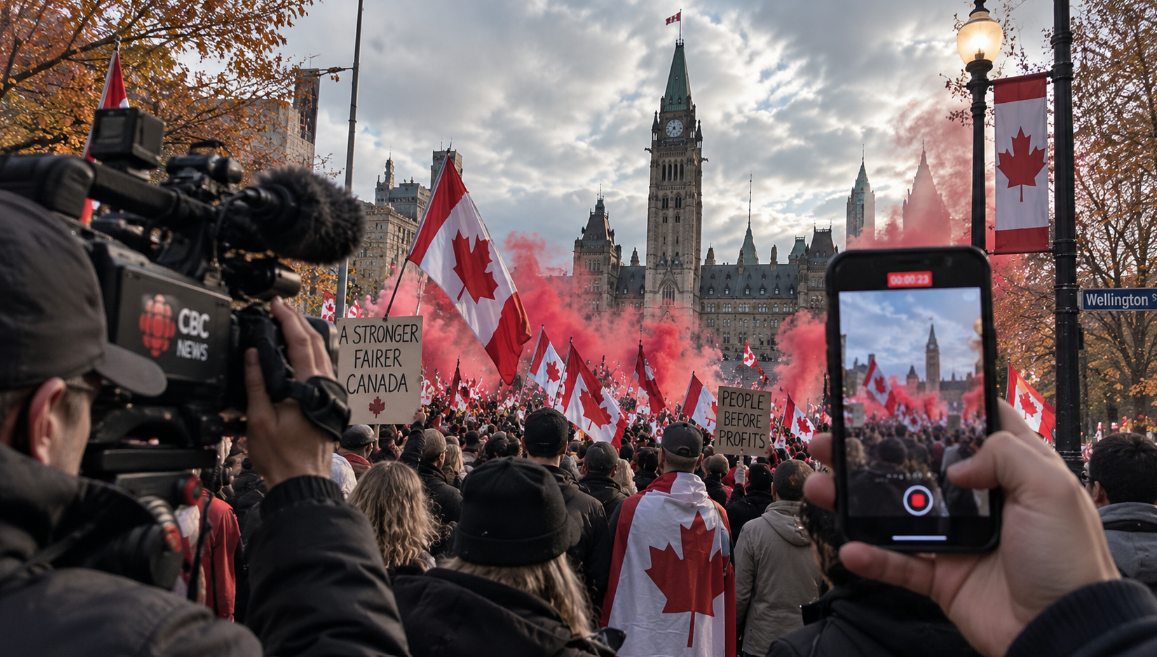
This is an editorial scenario, not a report of a specific incident.
Imagine a weather segment has ended and the camera briefly remains on the scene outside. Viewers notice a flag moving, changing light or someone putting on a coat. The quiet image attracts attention because it seems to say something immediate about the day.
A scene and a forecast answer different questions
The image can show the visible conditions at the moment it was recorded. It cannot, by itself, establish the conditions along a viewer’s later route or the information currently issued for that destination. The recording time and location would need to be clear before even a limited comparison was useful.
A thoughtful reader could ask: when was this filmed, where was it filmed, and is the clip being shared with its original context? Those questions keep an engaging moment from becoming an unsupported forecast.
Return to information you can act on
For an outing, the next step is to read the current official information for the places and period involved. Follow relevant instructions, and check any separate operator updates that affect the plan.
In this imagined example, the off-air moment is interesting as an observation. Its appeal does not make it a replacement for a weather source, and the people in a picture should not be treated as evidence that a particular activity is suitable.
General information and editorial perspectives. For a specific service, venue or arrangement, check with the responsible organization. Send a question or correction.